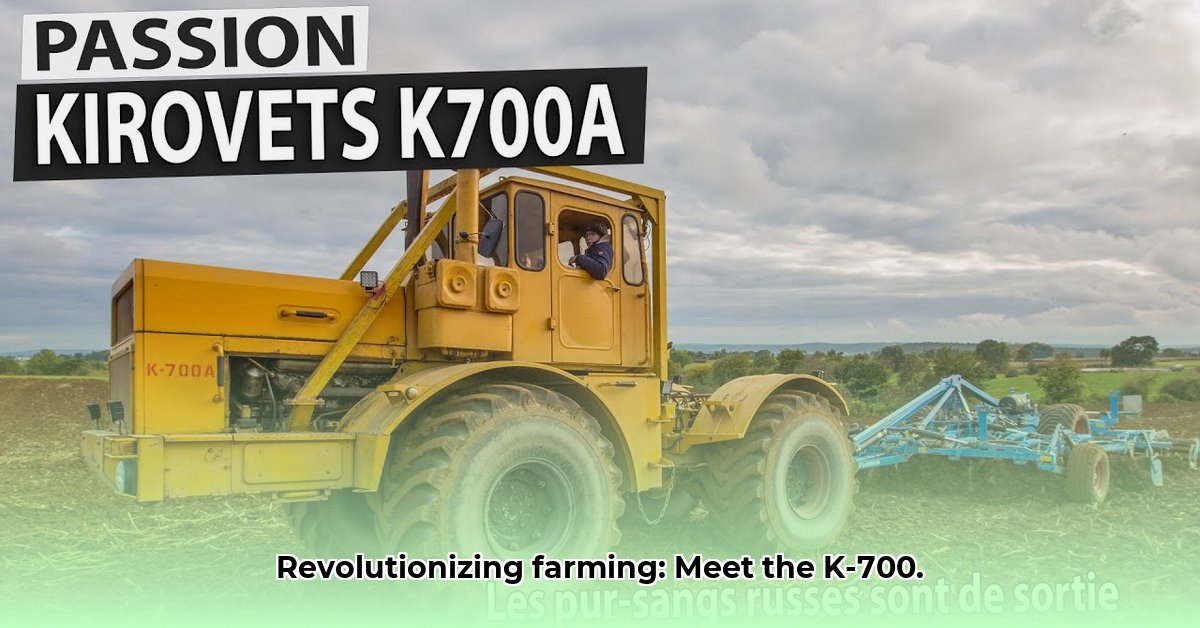
The Kirovets K-700 tractor, a powerful workhorse known throughout Eastern Europe and beyond, has significantly influenced agricultural practices for decades. Its robust design and impressive capabilities have enabled efficient large-scale farming. However, in the context of modern sustainable agriculture, a critical evaluation of its environmental and economic impacts is essential. For more information on the costs associated with agricultural equipment, check out this helpful resource on tractor costs. This case study analyzes the K-700's role in sustainable agriculture, exploring its technical specifications, environmental impact, economic considerations, and outlining actionable strategies for stakeholders.
The K-700: A Technical Overview
The K-700 boasts a powerful V8 engine, providing substantial pulling power for demanding agricultural tasks. Its large fuel tank, holding nearly 120 gallons, reflects its significant fuel consumption. While its strength is undeniable, this high fuel consumption raises concerns regarding its environmental footprint. The tractor's considerable weight also contributes to soil compaction, a significant issue for long-term soil health and sustainability. This presents a trade-off between productivity and environmental responsibility. What is the optimal balance for modern sustainable agriculture?
Sustainability Analysis: Positive and Negative Impacts
The K-700's impact on sustainable agriculture is multifaceted. Its high pulling power undoubtedly enhances efficiency, enabling faster and more extensive land coverage. However, its high fuel consumption and substantial weight are major drawbacks. High fuel consumption leads to increased greenhouse gas emissions, contradicting sustainable farming goals of minimizing environmental impact. Similarly, soil compaction from its weight reduces soil aeration, water infiltration, and root growth, potentially harming long-term soil health and crop yields.
Quantifiable Fact: The K-700's fuel tank capacity indicates significantly elevated fuel consumption when compared to modern, more fuel-efficient tractors. This difference needs to be considered in the context of a farm's overall carbon footprint.
Stakeholder Analysis: Perspectives and Recommendations
Sustainable integration of the K-700 necessitates a collaborative effort among various stakeholders. Each group plays a crucial role in either mitigating negative impacts or promoting more sustainable practices.
1. Farmers: Farmers relying on K-700 tractors need to consider fuel efficiency improvements, such as regular maintenance and optimized operating techniques, alongside exploring options for government subsidies or funding programs to facilitate transitions to more sustainable alternatives.
2. Equipment Manufacturers: Manufacturers can contribute by investing in research and development for more fuel-efficient and lighter tractors, thereby reducing the environmental load. Innovative designs incorporating sustainable materials and manufacturing processes are crucial.
3. Governments: Governmental support is essential in promoting sustainable agriculture. Policies incentivizing the adoption of fuel-efficient machinery, coupled with financial assistance for farmers transitioning to newer technologies, are essential for shifting towards sustainable practices.
4. Agricultural Researchers: Ongoing research is needed to compare the overall lifecycle costs and environmental impact of the K-700 versus newer, more energy-efficient tractors. This research should include analysis of soil compaction, fuel use, and overall environmental impact.
Conclusion: The K-700's Role in Sustainable Agriculture
The Kirovets K-700 tractor has played a considerable role in agricultural productivity, particularly in specific regions, but its long-term viability within sustainable agriculture requires careful management and a transition towards more environmentally friendly alternatives. While its robust capabilities have historical significance, addressing its substantial fuel consumption and soil compaction impact through targeted strategies and collaboration among stakeholders is crucial for maintaining productive and environmentally responsible farming practices. Investing in sustainable farming practices, including the adoption of more efficient machinery and soil conservation techniques offers a pathway towards balancing economic needs with environmental responsibility. The future of agriculture hinges on this delicate balance.
Three Pivotal Points:
- The K-700's high fuel consumption directly impacts its overall environmental sustainability.
- Soil compaction caused by the tractor's weight negatively affects long-term soil health and crop yields.
- A collaborative effort involving farmers, manufacturers, and governments is essential for transitioning to more sustainable agricultural practices.